


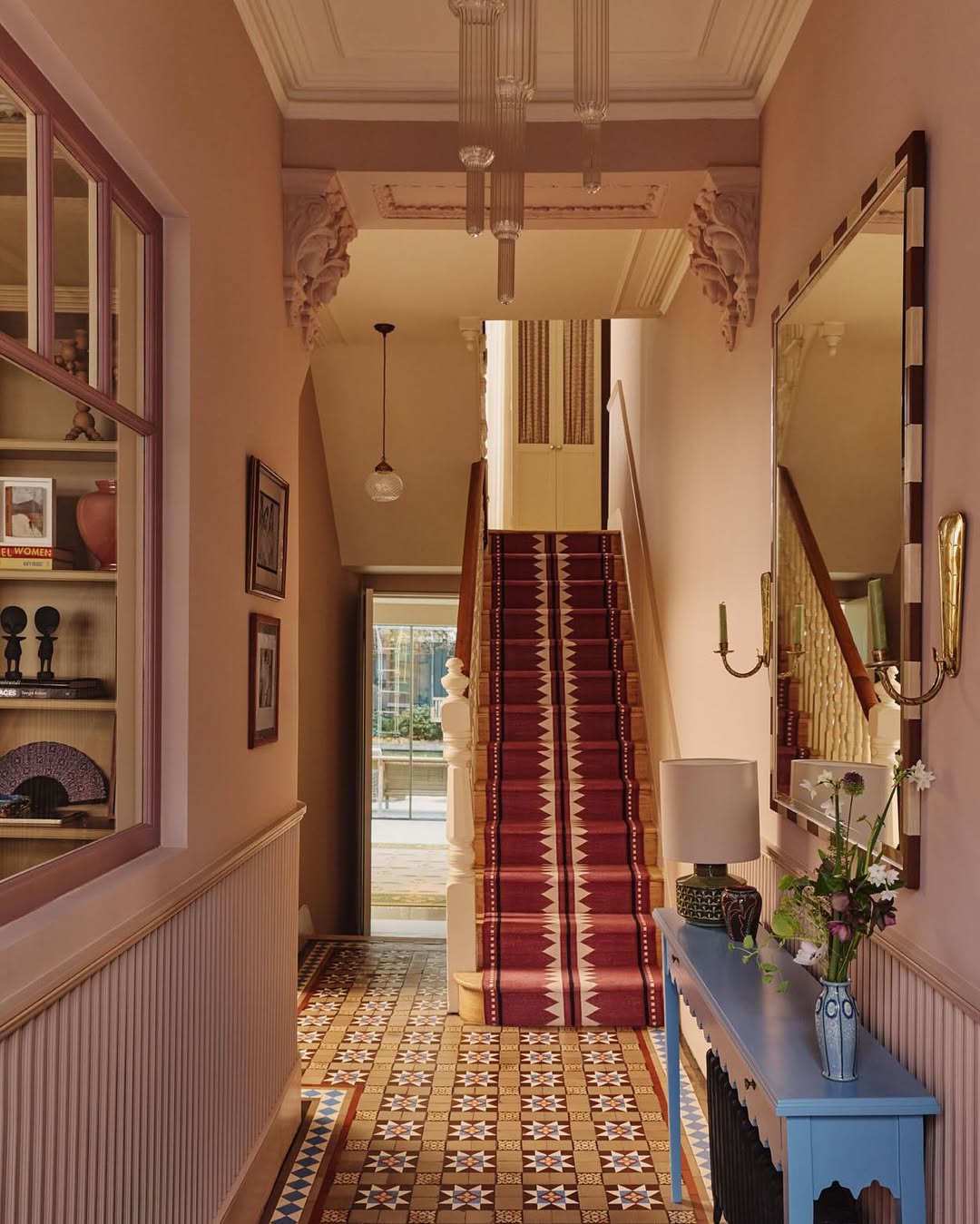
In the world of interior design, few elements balance form and function quite as elegantly as a stair runner. Yet, for many homeowners embarking on a hallway renovation, the question often arises: what are stair runners, exactly? Are they simply narrow carpets, or something more specific? The answer lies in their unique construction, their purpose, and the way they interact with the architecture of your home.
At its simplest, a stair runner is a woven strip of carpet installed down the centre of a staircase, leaving a visible margin of wood or paint—known as the 'reveal'—on either side. But to define it only by its placement is to overlook its true value. A runner is a sophisticated bridge between floors, a layer of acoustic insulation, and a canvas for texture and colour that turns a purely functional structure into a central design statement.
The Purpose of a Stair Runner
Historically, runners were a sign of status and a practical necessity in draughty homes. Today, their role has evolved but remains rooted in practicality. Unlike fully fitted carpet, which conceals the staircase entirely, a runner celebrates the structure beneath. It frames the craftsmanship of the timber while providing the comfort and grip that bare wood lacks.
By exposing the edges of the steps, a runner creates a visual 'frame' that can make a staircase feel wider and more grand. It guides the eye upwards, creating a sense of flow and continuity that links the downstairs hallway with the landing above.

Key Characteristics: What Sets Them Apart?
To understand what stair runners bring to a home, it helps to look at their defining features. They are distinct from standard broadloom carpet in several ways:
- Selvedge Edges: True woven runners often feature a 'selvedge'—a finished, woven edge that doesn't require binding or whipping. This creates a crisp, clean line that looks tailored and intentional.
- Specific Widths: While standard carpet comes in broad rolls, runners are typically woven in narrower widths (commonly between 60cm and 90cm) specifically designed to fit staircases and corridors.
- Directional Weave: Quality runners are designed to withstand the unique wear patterns of stairs. The weave is often engineered to wrap tightly over the nosing of a tread without grinning (opening up to reveal the backing).
Types of Stair Runners: Flatweave vs. Pile
When exploring options, you will largely encounter two main categories: flatweave and pile. Understanding the difference is key to finding the right look and feel for your home.
Flatweave Runners
Flatweave runners are created by interlocking warp and weft threads without knots, resulting in a low-profile, durable finish. They have no tufted pile to flatten, making them exceptionally hard-wearing and ideal for busy staircases. Their texture is architectural and crisp, often featuring geometric patterns or bold stripes. Because they sit flat against the stair, they offer a smart, contemporary look that is incredibly practical for family life.
Pile Runners
Pile runners have a raised surface of cut or looped fibres, offering a softer, more cushioned feel underfoot. They can add a sense of luxury and warmth but may require more maintenance to keep the pile looking fresh on the tread edges where foot traffic is heaviest.
Why Choose a Runner Over Fully Fitted Carpet?
The decision often comes down to aesthetics and maintenance. A runner is far easier to remove and replace than fully fitted carpet, should you wish to update your scheme in the future. It also allows for easier cleaning of the exposed timber edges, which can simply be wiped down.
Aesthetically, a runner offers flexibility. You can be bolder with pattern and colour on a runner than you might dare with a wall-to-wall carpet. A striking stripe or a vibrant geometric design becomes a feature piece—like art for your floor—rather than a background element. For inspiration on how bold designs can work, browse our stair runner inspiration page.
Materials Matter: Wool, Cotton, and Synthetics
The fibre composition defines the runner's performance. Wool remains the gold standard for its natural resilience; the fibres spring back after compression, meaning your runner keeps its shape even after thousands of footsteps. Cotton is often used in flatweaves for a softer, more casual finish, while synthetics or blends can offer durability at a different price point.
At the premium end, you will find runners that blend materials—such as wool and jute—to combine comfort with robust texture. The choice of material affects not just the feel, but also the installation. For a deeper dive into fitting considerations, see our guide on how to fit a stair runner without nails.
Designer's Note
Don't underestimate the acoustic impact of a runner. In open-plan homes or properties with wooden floors, a staircase can act as a sound funnel, amplifying footsteps and conversation. A quality runner absorbs this noise, instantly making the home feel calmer and more solid. It’s a sensory upgrade as much as a visual one.

Installation Styles: Waterfall vs. Wrapped
Even the way a runner is fitted changes its character. The two most common styles you'll encounter are Waterfall and Wrapped.
The Waterfall style lets the runner flow smoothly over the nose of the tread and straight down the riser, creating a clean, modern cascade. It is a popular choice for our wool collections, allowing the pattern to run uninterrupted.
The Wrap style (sometimes called the American way) involves moulding the runner tightly around the nosing of each tread. The material is pulled taut and stapled under the nose of the step. This creates a tailored, upholstered finish that emphasizes the architectural profile of the staircase. It is particularly effective for preventing warping on specific weaves like cotton.
Choosing the right style depends on your staircase type and your personal taste. Professional fitters will often have a preferred method based on the material you choose, ensuring the best possible finish and durability.
The Final Verdict
So, what are stair runners? They are the unsung heroes of the hallway. They protect your staircase, soften your acoustics, and provide a daily dose of joy through colour and craft. Whether you choose a classic herringbone or a bold, contemporary flatweave, a runner is a commitment to quality living—a small change that makes a grand entrance.
Ready to find the perfect one for your home? Explore our stair runner ideas to see how different styles can transform a space, or visit our calculator to start planning your project today.
Share:
What Is the Trend in Stair Runners in 2026? Timeless Design Meets Bold Expression
What is the Best Material for Stair Runners? Our Guide to Wool, Cotton and Jute